AEROFLEX SEALING MATERIAL

Uncategorized

Uncategorized

Hydrogen Gasket Material: 7 Critical Factors for Safe High-Pressure Sealing in 2026

Hydrogen Gasket Material is becoming an important specification topic for engineers, OEM buyers, energy companies and industrial maintenance teams in 2026. As hydrogen is used in fuel cells, storage cylinders, pipelines, compressors and clean-energy projects, the gasket is no longer a small commodity part. It becomes a safety barrier that must control leakage, pressure cycling, temperature change and chemical exposure at the same time. Hydrogen is the lightest element, which makes hydrogen sealing more challenging than sealing many liquids or heavy gases. For basic context, readers can review Wikipedia’s hydrogen overview. In real applications, the right Hydrogen Gasket Material must resist permeation, maintain bolt load and protect the joint even when equipment starts, stops or vibrates. This guide explains the seven practical selection factors that help engineers choose a safer gasket material for hydrogen service without overcomplicating the buying process. For buyers comparing non-asbestos options, Aeroflex offers engineered gasket material families that can support industrial sealing discussions. Explore the Non Asbestos Gasket Material range or speak with the Aeroflex technical team for application-specific guidance. Table of Contents What Is Hydrogen Gasket Material? Hydrogen Gasket Material refers to a sealing sheet, ring or engineered gasket compound selected for hydrogen-containing systems. The purpose is simple: keep hydrogen inside the joint and keep air, moisture and contaminants outside the joint. The challenge is that hydrogen molecules are small, mobile and difficult to contain when the gasket, flange surface or bolt load is poorly matched. A good Hydrogen Gasket Material is not selected by temperature alone. It must be checked against gas permeability, compressibility, recovery, tensile strength, chemical compatibility, flange finish and installation method. In low-to-medium pressure systems, non-asbestos compressed fiber materials may be considered for supporting equipment and auxiliary systems when validated by the user’s engineering team. In high-pressure hydrogen systems, engineers may evaluate graphite, PTFE, elastomer, semi-metallic or metallic sealing designs depending on service severity. Why Hydrogen Gasket Material Selection Matters in 2026 The hydrogen economy is creating new sealing expectations across storage, mobility, fuel cells and industrial decarbonization. However, hydrogen can also create risks such as leakage, flammability concerns and material degradation. The topic of hydrogen embrittlement is especially important for metallic components; for background, see Wikipedia’s hydrogen embrittlement page. Although a gasket is not the only component in the joint, the wrong Hydrogen Gasket Material can increase leakage paths and place extra stress on surrounding hardware. In 2026, engineers are expected to reduce fugitive emissions, improve system uptime and document material choices more carefully. That is why Hydrogen Gasket Material selection should be treated as a reliability decision, not only a procurement decision. A low-cost gasket can become expensive if it causes a shutdown, retightening cycle, pressure drop or safety incident. 7 Key Factors for Choosing Hydrogen Gasket Material 1. Hydrogen Gasket Material Permeation Resistance Permeation is the first factor because hydrogen can pass through many materials more easily than heavier gases. When selecting Hydrogen Gasket Material, ask for data or guidance related to gas tightness, leakage rate and service environment. The material should create a dense sealing barrier while still conforming to flange imperfections. For critical hydrogen systems, never assume that a gasket suitable for oil, water or steam will automatically be suitable for hydrogen. 2. Pressure Rating and Blowout Safety Hydrogen systems may involve high pressure, rapid cycling and pressure surges. A reliable Hydrogen Gasket Material must handle the maximum operating pressure, not only the average pressure. Engineers should also consider flange class, gasket thickness, bolt strength and available seating stress. If the gasket is too soft, it can extrude or crush. If it is too hard, it may not seal minor flange irregularities. 3. Temperature Range and Thermal Cycling Temperature changes affect gasket recovery, binder stability and long-term load retention. Hydrogen Gasket Material should be selected for both continuous temperature and peak excursions. Thermal cycling can relax bolt load and open micro-leak paths, especially in compressors, valves and equipment that starts and stops frequently. A gasket with good recovery helps maintain sealing pressure after repeated heating and cooling. 4. Chemical Compatibility and Media Exposure Hydrogen may not be the only exposure inside a system. Moisture, oxygen traces, oils, coolants, lubricants or process chemicals can contact the sealing surface. Hydrogen Gasket Material should be compatible with the complete media profile. For auxiliary industrial equipment, buyers may also compare grades from Aeroflex’s Non-Asbestos Soft Gasket Material range where oil, fuel and water resistance are relevant to supporting systems. 5. Flange Surface Finish and Compressibility Even the best Hydrogen Gasket Material can fail when installed between damaged or mismatched flanges. Surface finish, flatness and rigidity decide how well the gasket fills microscopic channels. Soft sheet materials need enough compressibility to seal, while metallic designs need precise surfaces and controlled bolt load. Before approving a material, check whether the flange condition supports the selected gasket type. 6. Bolt Load, Torque Control and Creep Resistance Bolt load is the force that activates the gasket seal. If torque is low, hydrogen can leak through tiny gaps. If torque is excessive, the gasket can crush or lose recovery. Hydrogen Gasket Material should be evaluated with recommended seating stress, creep relaxation and torque procedure. Using a calibrated torque wrench, correct bolt pattern and retightening guidance can improve joint reliability. 7. Testing, Traceability and Supplier Support Critical sealing applications need documentation. Choose Hydrogen Gasket Material from a supplier that can discuss test methods, batch consistency, thickness tolerance and application suitability. Engineers should request technical data rather than relying only on catalogue descriptions. A supplier with gasket material experience can help compare non-asbestos sheets, high-temperature options and engineered sealing solutions for the surrounding equipment. Recommended Applications for Hydrogen-Compatible Gasket Material Hydrogen-compatible gasket material may be considered in hydrogen production support systems, fuel-cell balance-of-plant equipment, storage and distribution hardware, electrolyzer auxiliary equipment, compressors, valves and instrumentation. The final choice depends on pressure, temperature and safety classification. For non-critical support areas, a properly validated Hydrogen Gasket Material can help reduce leaks and support cleaner operation. For critical high-pressure

Uncategorized

EV Battery Pack Gasket Material: 7 Key Selection Factors for Thermal, Moisture & Safety Sealing in 2026

Electric vehicles are changing how engineers think about sealing. A battery pack is not just a metal box; it protects cells, electronics, cooling channels and safety systems from heat, water, dust, vibration and chemicals. That is why EV Battery Pack Gasket Material selection is a serious engineering decision in 2026. The right material supports thermal protection, moisture sealing and safer battery enclosure performance, while the wrong material can increase leakage, compression loss and service risk. For OEMs, tier suppliers and industrial buyers, EV Battery Pack Gasket Material must do more than close a gap. It should maintain sealing force, resist ageing, support electrical safety and fit the production process. This guide explains seven EV Battery Pack Gasket Material factors to review before choosing a gasket sheet or sealing material for EV battery pack applications. Table of Contents Why EV Battery Pack Gasket Material Matters in 2026 An electric vehicle battery stores energy in cells assembled into modules and packs. As explained in the electric vehicle battery overview, many EV batteries are lithium-ion based and designed for high power-to-weight ratio and energy density. That makes the battery pack one of the most valuable and sensitive parts of the vehicle. EV Battery Pack Gasket Material protects the enclosure from outside contaminants and helps maintain a stable internal environment. It may be used around pack covers, module housings, service lids, cooling plates, junction boxes or access panels. Because these areas face heat cycles, road splash, dust and vibration, selection should follow real operating conditions, not only catalogue data. EV Battery Pack Gasket Material for Thermal Protection Thermal behaviour is the first selection point. EV battery packs operate across changing climates and charging conditions, so the gasket must tolerate repeated heating and cooling without cracking, hardening or losing recovery. A reliable EV Battery Pack Gasket Material should remain dimensionally stable under heat and long service life demands. Engineers should check maximum temperature, short-duration temperature tolerance, heat ageing results and recovery after exposure. For pack covers and enclosure seals, the goal is not only to survive heat; it is to maintain a seal after many temperature cycles. Thermal Management Gasket and Heat-Resistant Sealing A thermal management gasket should work with the pack design. Some areas need insulation, while others need separation between sensitive surfaces. EV Battery Pack Gasket Material should be evaluated with cooling plates, cell spacing, venting strategy and nearby electronics in mind. EV Battery Pack Gasket Material for Moisture Sealing Water ingress is one of the biggest risks for battery enclosures. Rain, road splash, humidity and condensation can all challenge the seal. A suitable EV Battery Pack Gasket Material should help maintain moisture sealing while supporting the required ingress protection target. For battery pack sealing, ask whether the material resists water absorption, swelling and thickness loss after exposure. Also consider flange design. Even a strong gasket may fail if the surface is uneven, bolt load is inconsistent or the gasket is crushed beyond its working range. IP67 Battery Enclosure Gasket and Dust Protection An IP67 battery enclosure gasket strategy depends on material choice, gasket geometry, bolt load, surface finish and assembly controls. EV Battery Pack Gasket Material should be tested as part of the enclosure system, especially where service lids or removable covers are used. Electrical Insulation and Dielectric Safety Battery packs contain high-voltage components, so electrical safety is critical. EV Battery Pack Gasket Material used near electrical housings should be reviewed for dielectric properties, insulation behaviour and contamination risk. The material should not create conductive paths or reduce separation between sensitive components. This factor matters around junction boxes, busbar covers, module separators and enclosure areas near electronics. Buyers should ask suppliers for technical data, test standards and application guidance before approving a gasket material for high-voltage EV use. Compression Set and Long-Term Sealing Force A gasket works because it stays compressed enough to block leakage. If it takes a high compression set, it may not recover when the enclosure expands, contracts or vibrates. EV Battery Pack Gasket Material should maintain sealing force over time, even after heat ageing and mechanical cycling. Review compressibility, recovery, density, thickness tolerance and recommended flange pressure. A material that is too soft may over-compress. A material that is too hard may not conform to minor flange irregularities. The best EV Battery Pack Gasket Material balances conformability with recovery. Battery Pack Enclosure Seal and Compression Recovery A battery pack enclosure seal should be validated under realistic torque, gap and vibration conditions. Engineers should match the gasket grade with flange stiffness, bolt spacing, surface finish and service life. Chemical Resistance to Coolants, Oils and Road Exposure EVs may expose seals to glycol-water coolants, oils, greases, cleaning fluids, salt spray and road chemicals. EV Battery Pack Gasket Material should be checked for swelling, weight change and strength retention after chemical exposure. Aeroflex manufactures non-asbestos gasket material for demanding sealing applications where oil, fuel, water and industrial fluid resistance can matter. For EV-related discussions, buyers can review relevant material families and compare them against the exact battery enclosure environment. Chemical resistance should always be confirmed with application-specific testing. Fire Safety and Thermal Runaway Risk Awareness Battery safety conversations often include thermal runaway, a condition where heat generation can accelerate inside a cell or battery system. A gasket cannot stop every battery event, but the right EV Battery Pack Gasket Material can support the broader safety strategy by helping control sealing, spacing, contamination and enclosure integrity. Material buyers should ask about flame resistance, smoke behaviour, heat shielding compatibility and performance after heat exposure. In safety-sensitive zones, EV Battery Pack Gasket Material may need to work with insulation layers, venting paths, barriers and enclosure design. The gasket should never block required pressure relief or emergency venting functions. Flame-Resistant Gasket Material for EV Battery Safety Flame-resistant gasket material is not chosen by one specification alone. Engineers should consider the total pack design, seal location and consequences of failure. EV Battery Pack Gasket Material used near high-risk zones should be validated through OEM-approved testing.

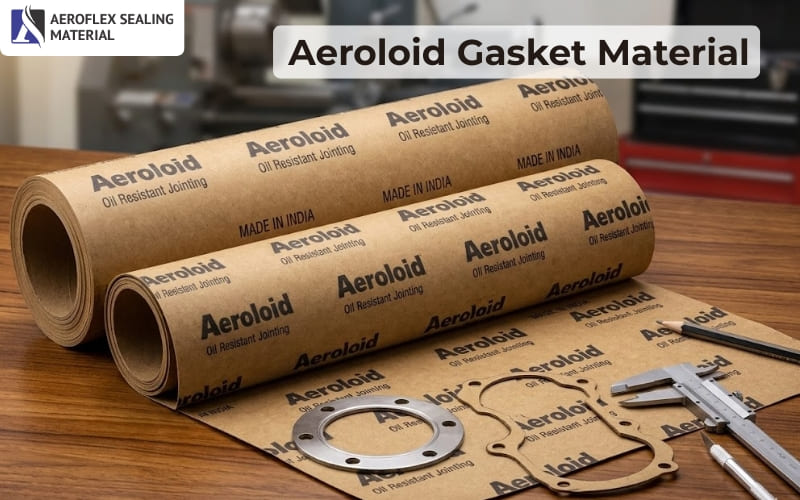
Aeroloid gasket material sheet used for automotive sealing, non-asbestos industrial gasket solution resistant to heat, oil, and pressure.
Uncategorized

Aeroloid Gasket Material: Non-Asbestos Solution for Automotive Sealing

Modern automotive systems operate under demanding conditions that involve high temperatures, constant vibration, and exposure to oils and fuels. To maintain reliable sealing performance in such environments, industries require advanced gasket materials that can withstand chemical stress while maintaining structural stability. Aeroloid Gasket Material is designed to meet these challenges by offering a high-performance, non-asbestos sealing solution for automotive and industrial applications. Manufactured with advanced fiber technology, this material provides excellent resistance to oil, fuel, and heat, making it suitable for engines, pumps, compressors, and other critical mechanical systems. In India’s growing automotive and engineering sectors, companies like Aeroflex Sealing Material Mfg. Co. are supplying innovative gasket solutions that ensure durability, safety, and long-term operational efficiency. Understanding Aeroloid Non-Asbestos Gasket Material Aeroloid Non-Asbestos Gasket Material is a specialized sealing sheet engineered without asbestos fibers. Instead of asbestos, modern gasket materials are manufactured using a combination of high-strength fibers, elastomers, and performance-enhancing binders. This composition allows the material to maintain flexibility and sealing efficiency even when exposed to harsh mechanical and thermal conditions. Unlike traditional asbestos gaskets, which pose health and environmental risks, modern non-asbestos materials are safer and comply with international industrial standards. They also offer improved durability and chemical resistance, making them ideal for modern automotive systems. In practical applications, Aeroloid-based gasket sheets are used wherever tight, leak-proof sealing is required between metal surfaces operating under pressure or high temperatures. Why Automotive Systems Require Advanced Gasket Materials Automotive engines and mechanical assemblies involve multiple sealing points where fluids and gases must remain contained under extreme operating conditions. A reliable automotive gasket material plays a critical role in maintaining system integrity and preventing leaks that could compromise performance or safety. Typical conditions that automotive sealing materials must withstand include: Because of these factors, engineers prefer gasket materials that combine flexibility, compressibility, and chemical resistance. Modern gasket solutions like Aeroloid offer these properties while maintaining consistent sealing performance over extended service periods. Key Performance Properties of Aeroloid Gasket Material The effectiveness of any gasket sheet depends on its ability to adapt to sealing surfaces while maintaining strength under stress. High-quality industrial sealing gasket material must be carefully engineered to balance flexibility with durability. Important performance characteristics include: Because of these features, Aeroloid-based materials are often selected for applications where conventional gasket sheets may fail under harsh operating conditions. Oil and Fuel Resistance in Automotive Applications Automotive sealing systems frequently come into direct contact with oils and fuels. When gasket materials are exposed to such chemicals, inferior materials can swell, degrade, or lose their sealing capacity. A high-quality oil resistant gasket material is designed to maintain dimensional stability even when continuously exposed to lubricants and petroleum-based fluids. Similarly, a fuel resistant gasket sheet must be able to withstand gasoline, diesel, and other hydrocarbons without losing structural integrity. Aeroloid gasket sheets are engineered to address both requirements. Their material composition allows them to maintain sealing performance in engine assemblies, fuel pumps, carburetors, and other automotive components where exposure to aggressive fluids is unavoidable. Temperature Resistance and Thermal Stability Temperature fluctuations represent another major challenge for automotive sealing systems. Engine components often operate in environments where heat levels fluctuate rapidly during operation. A reliable high temperature gasket material must maintain its mechanical properties even under continuous thermal stress. Materials that lose elasticity or become brittle under heat can quickly lead to leakage or mechanical failure. Aeroloid gasket sheets are engineered to withstand elevated temperatures without significant degradation. This thermal resistance makes them suitable for components such as exhaust systems, engine housings, and heat-generating mechanical assemblies. Typical Automotive and Industrial Applications The versatility of non asbestos gasket sheet for automotive applications allows it to be used across a wide range of mechanical and industrial environments. Common applications include: Because of its adaptability, Aeroloid is considered a durable automotive sealing material capable of supporting both automotive and heavy industrial machinery. Comparison: Aeroloid vs Traditional Gasket Materials To understand the advantages of modern gasket solutions, it is helpful to compare them with conventional sealing materials used in the past. Feature Aeroloid Non-Asbestos Gasket Material Traditional Asbestos Gasket Safety Environmentally safer Health concerns due to asbestos fibers Oil & Fuel Resistance High resistance Moderate performance Temperature Stability Designed for high heat conditions Good but outdated Durability Long service life Can degrade over time Industry Compliance Meets modern regulations Increasingly restricted This shift toward non-asbestos materials reflects a global trend toward safer and more efficient industrial sealing technologies. Role of Advanced Sealing Materials in India’s Automotive Sector India’s automotive and manufacturing industries are expanding rapidly, with increasing demand for reliable mechanical components and industrial materials. As vehicle production grows and engineering standards become more advanced, the need for high-quality sealing materials continues to increase. Manufacturers specializing in advanced gasket technology play an important role in supporting this growth. Companies such as Aeroflex Sealing Material Mfg. Co. focus on producing engineered sealing solutions designed for demanding automotive and industrial environments. Through continuous innovation and material engineering, such manufacturers provide dependable gasket materials that meet the performance expectations of modern mechanical systems. Why Manufacturers Choose Aeroloid Gasket Solutions Industrial engineers and automotive manufacturers select gasket materials based on reliability, safety, and performance consistency. Aeroloid-based gasket sheets provide several advantages that make them suitable for demanding applications: These qualities help ensure that equipment operates efficiently without the risk of leakage or premature gasket failure. Frequently Asked Questions What is Aeroloid gasket material used for? Aeroloid gasket material is commonly used for sealing automotive engines, fuel systems, pumps, compressors, and other mechanical assemblies where resistance to oil, fuel, and heat is required. Is Aeroloid a non-asbestos gasket material? Yes. Aeroloid is engineered as a non-asbestos gasket sheet designed to provide safe and reliable sealing performance without the health risks associated with traditional asbestos materials. Can Aeroloid gasket sheets handle high temperatures? Yes. These gasket materials are designed as high temperature gasket materials capable of maintaining structural stability and sealing efficiency in demanding automotive environments. Where are fuel resistant gasket sheets commonly used?

WhatsApp
Scroll to Top