
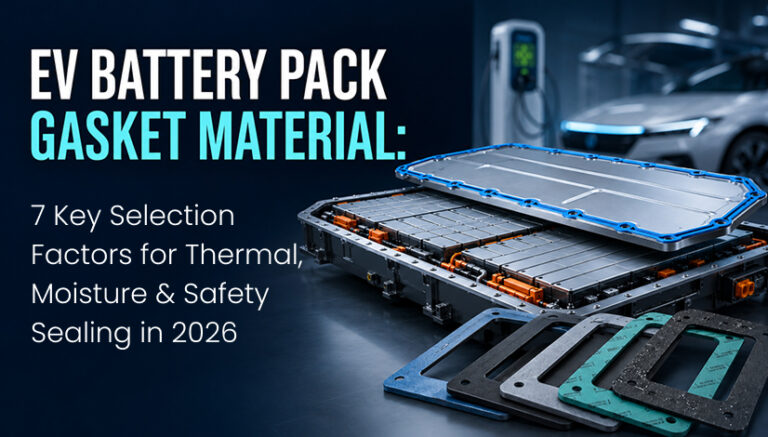
Electric vehicles are changing how engineers think about sealing. A battery pack is not just a metal box; it protects cells, electronics, cooling channels and safety systems from heat, water, dust, vibration and chemicals. That is why EV Battery Pack Gasket Material selection is a serious engineering decision in 2026. The right material supports thermal protection, moisture sealing and safer battery enclosure performance, while the wrong material can increase leakage, compression loss and service risk.
For OEMs, tier suppliers and industrial buyers, EV Battery Pack Gasket Material must do more than close a gap. It should maintain sealing force, resist ageing, support electrical safety and fit the production process. This guide explains seven EV Battery Pack Gasket Material factors to review before choosing a gasket sheet or sealing material for EV battery pack applications.
Why EV Battery Pack Gasket Material Matters in 2026
An electric vehicle battery stores energy in cells assembled into modules and packs. As explained in the electric vehicle battery overview, many EV batteries are lithium-ion based and designed for high power-to-weight ratio and energy density. That makes the battery pack one of the most valuable and sensitive parts of the vehicle.
EV Battery Pack Gasket Material protects the enclosure from outside contaminants and helps maintain a stable internal environment. It may be used around pack covers, module housings, service lids, cooling plates, junction boxes or access panels. Because these areas face heat cycles, road splash, dust and vibration, selection should follow real operating conditions, not only catalogue data.
EV Battery Pack Gasket Material for Thermal Protection
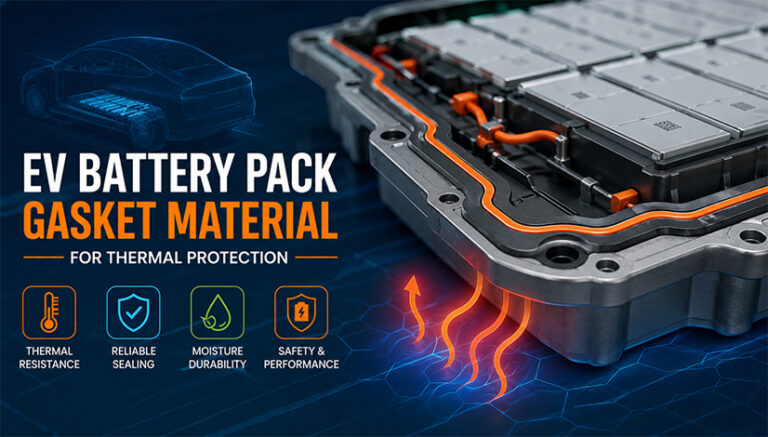
Thermal behaviour is the first selection point. EV battery packs operate across changing climates and charging conditions, so the gasket must tolerate repeated heating and cooling without cracking, hardening or losing recovery. A reliable EV Battery Pack Gasket Material should remain dimensionally stable under heat and long service life demands.
Engineers should check maximum temperature, short-duration temperature tolerance, heat ageing results and recovery after exposure. For pack covers and enclosure seals, the goal is not only to survive heat; it is to maintain a seal after many temperature cycles.
Thermal Management Gasket and Heat-Resistant Sealing
A thermal management gasket should work with the pack design. Some areas need insulation, while others need separation between sensitive surfaces. EV Battery Pack Gasket Material should be evaluated with cooling plates, cell spacing, venting strategy and nearby electronics in mind.
EV Battery Pack Gasket Material for Moisture Sealing
Water ingress is one of the biggest risks for battery enclosures. Rain, road splash, humidity and condensation can all challenge the seal. A suitable EV Battery Pack Gasket Material should help maintain moisture sealing while supporting the required ingress protection target.
For battery pack sealing, ask whether the material resists water absorption, swelling and thickness loss after exposure. Also consider flange design. Even a strong gasket may fail if the surface is uneven, bolt load is inconsistent or the gasket is crushed beyond its working range.
IP67 Battery Enclosure Gasket and Dust Protection
An IP67 battery enclosure gasket strategy depends on material choice, gasket geometry, bolt load, surface finish and assembly controls. EV Battery Pack Gasket Material should be tested as part of the enclosure system, especially where service lids or removable covers are used.
Electrical Insulation and Dielectric Safety
Battery packs contain high-voltage components, so electrical safety is critical. EV Battery Pack Gasket Material used near electrical housings should be reviewed for dielectric properties, insulation behaviour and contamination risk. The material should not create conductive paths or reduce separation between sensitive components.
This factor matters around junction boxes, busbar covers, module separators and enclosure areas near electronics. Buyers should ask suppliers for technical data, test standards and application guidance before approving a gasket material for high-voltage EV use.
Compression Set and Long-Term Sealing Force
A gasket works because it stays compressed enough to block leakage. If it takes a high compression set, it may not recover when the enclosure expands, contracts or vibrates. EV Battery Pack Gasket Material should maintain sealing force over time, even after heat ageing and mechanical cycling.
Review compressibility, recovery, density, thickness tolerance and recommended flange pressure. A material that is too soft may over-compress. A material that is too hard may not conform to minor flange irregularities. The best EV Battery Pack Gasket Material balances conformability with recovery.
Battery Pack Enclosure Seal and Compression Recovery
A battery pack enclosure seal should be validated under realistic torque, gap and vibration conditions. Engineers should match the gasket grade with flange stiffness, bolt spacing, surface finish and service life.
Chemical Resistance to Coolants, Oils and Road Exposure
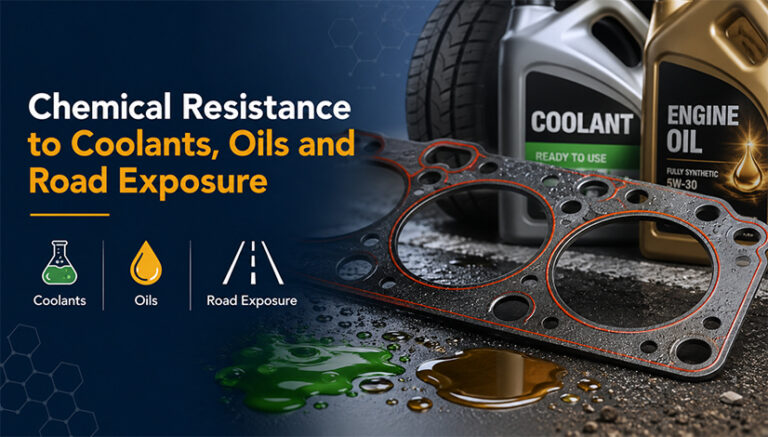
EVs may expose seals to glycol-water coolants, oils, greases, cleaning fluids, salt spray and road chemicals. EV Battery Pack Gasket Material should be checked for swelling, weight change and strength retention after chemical exposure.
Aeroflex manufactures non-asbestos gasket material for demanding sealing applications where oil, fuel, water and industrial fluid resistance can matter. For EV-related discussions, buyers can review relevant material families and compare them against the exact battery enclosure environment. Chemical resistance should always be confirmed with application-specific testing.
Fire Safety and Thermal Runaway Risk Awareness
Battery safety conversations often include thermal runaway, a condition where heat generation can accelerate inside a cell or battery system. A gasket cannot stop every battery event, but the right EV Battery Pack Gasket Material can support the broader safety strategy by helping control sealing, spacing, contamination and enclosure integrity.
Material buyers should ask about flame resistance, smoke behaviour, heat shielding compatibility and performance after heat exposure. In safety-sensitive zones, EV Battery Pack Gasket Material may need to work with insulation layers, venting paths, barriers and enclosure design. The gasket should never block required pressure relief or emergency venting functions.
Flame-Resistant Gasket Material for EV Battery Safety
Flame-resistant gasket material is not chosen by one specification alone. Engineers should consider the total pack design, seal location and consequences of failure. EV Battery Pack Gasket Material used near high-risk zones should be validated through OEM-approved testing.
Manufacturability, Thickness Control and OEM Consistency
EV production needs repeatability. EV Battery Pack Gasket Material should be available in consistent thickness, width, density and surface finish. It should cut cleanly, support die-cutting or conversion and maintain stable dimensions during storage and assembly.
For OEM and tier supplier programs, consistency is often as important as peak performance. Ask for quality systems, batch control, technical documentation and support for custom sizes.
Final Checklist for EV Battery Pack Gasket Material Selection
Before approval, review operating temperature, moisture sealing, dust protection, dielectric safety, compression set, chemical exposure, flame resistance, thickness tolerance, cutting quality and supplier support. The best EV Battery Pack Gasket Material is selected by matching material performance with enclosure design, assembly process and real service environment.
FAQs on EV Battery Pack Gasket Material
What is EV Battery Pack Gasket Material used for?
EV Battery Pack Gasket Material is used to seal battery enclosures, covers, access panels and related EV components against moisture, dust, vibration and environmental exposure.
Which properties are most important in EV battery sealing?
The most important properties include thermal stability, moisture resistance, compression recovery, dielectric safety, chemical resistance and consistent thickness.
Can non-asbestos gasket material be considered for EV applications?
Yes, non-asbestos gasket material may be considered where its technical properties match the application. Final EV Battery Pack Gasket Material selection should always be confirmed through design validation and testing.
How can buyers select the right grade?
Buyers should share temperature range, fluid exposure, flange pressure, thickness, enclosure design and safety requirements with the supplier. To discuss technical requirements, contact Aeroflex for material guidance and application support.
Conclusion
EV Battery Pack Gasket Material selection in 2026 is about safety, reliability and long-term sealing confidence. The EV Battery Pack Gasket Material must manage heat, resist moisture, maintain compression, support electrical safety and stay consistent in production. As EV designs evolve, gasket selection should begin early in engineering rather than after the enclosure is finalized. By reviewing these seven factors, manufacturers can reduce sealing risk and choose a material that supports cleaner, safer electric mobility.
