
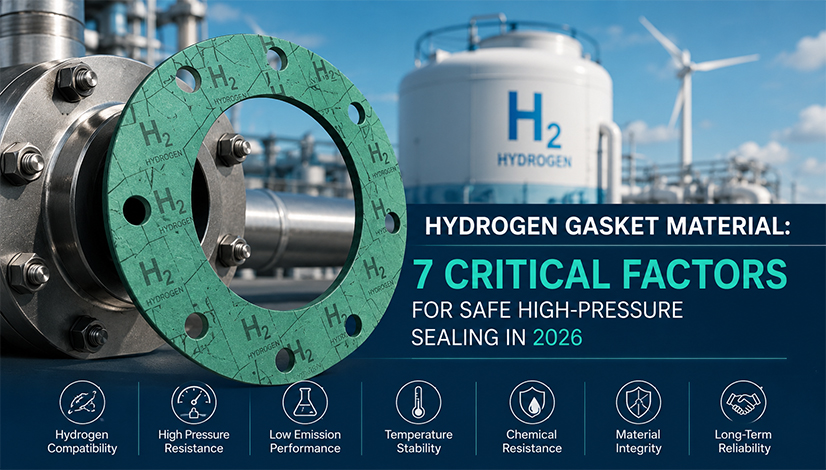
Hydrogen Gasket Material is becoming an important specification topic for engineers, OEM buyers, energy companies and industrial maintenance teams in 2026. As hydrogen is used in fuel cells, storage cylinders, pipelines, compressors and clean-energy projects, the gasket is no longer a small commodity part. It becomes a safety barrier that must control leakage, pressure cycling, temperature change and chemical exposure at the same time.
Hydrogen is the lightest element, which makes hydrogen sealing more challenging than sealing many liquids or heavy gases. For basic context, readers can review Wikipedia’s hydrogen overview. In real applications, the right Hydrogen Gasket Material must resist permeation, maintain bolt load and protect the joint even when equipment starts, stops or vibrates. This guide explains the seven practical selection factors that help engineers choose a safer gasket material for hydrogen service without overcomplicating the buying process.
For buyers comparing non-asbestos options, Aeroflex offers engineered gasket material families that can support industrial sealing discussions. Explore the Non Asbestos Gasket Material range or speak with the Aeroflex technical team for application-specific guidance.
What Is Hydrogen Gasket Material?
Hydrogen Gasket Material refers to a sealing sheet, ring or engineered gasket compound selected for hydrogen-containing systems. The purpose is simple: keep hydrogen inside the joint and keep air, moisture and contaminants outside the joint. The challenge is that hydrogen molecules are small, mobile and difficult to contain when the gasket, flange surface or bolt load is poorly matched.
A good Hydrogen Gasket Material is not selected by temperature alone. It must be checked against gas permeability, compressibility, recovery, tensile strength, chemical compatibility, flange finish and installation method. In low-to-medium pressure systems, non-asbestos compressed fiber materials may be considered for supporting equipment and auxiliary systems when validated by the user’s engineering team. In high-pressure hydrogen systems, engineers may evaluate graphite, PTFE, elastomer, semi-metallic or metallic sealing designs depending on service severity.
Why Hydrogen Gasket Material Selection Matters in 2026

The hydrogen economy is creating new sealing expectations across storage, mobility, fuel cells and industrial decarbonization. However, hydrogen can also create risks such as leakage, flammability concerns and material degradation. The topic of hydrogen embrittlement is especially important for metallic components; for background, see Wikipedia’s hydrogen embrittlement page. Although a gasket is not the only component in the joint, the wrong Hydrogen Gasket Material can increase leakage paths and place extra stress on surrounding hardware.
In 2026, engineers are expected to reduce fugitive emissions, improve system uptime and document material choices more carefully. That is why Hydrogen Gasket Material selection should be treated as a reliability decision, not only a procurement decision. A low-cost gasket can become expensive if it causes a shutdown, retightening cycle, pressure drop or safety incident.
7 Key Factors for Choosing Hydrogen Gasket Material
1. Hydrogen Gasket Material Permeation Resistance
Permeation is the first factor because hydrogen can pass through many materials more easily than heavier gases. When selecting Hydrogen Gasket Material, ask for data or guidance related to gas tightness, leakage rate and service environment. The material should create a dense sealing barrier while still conforming to flange imperfections. For critical hydrogen systems, never assume that a gasket suitable for oil, water or steam will automatically be suitable for hydrogen.
2. Pressure Rating and Blowout Safety
Hydrogen systems may involve high pressure, rapid cycling and pressure surges. A reliable Hydrogen Gasket Material must handle the maximum operating pressure, not only the average pressure. Engineers should also consider flange class, gasket thickness, bolt strength and available seating stress. If the gasket is too soft, it can extrude or crush. If it is too hard, it may not seal minor flange irregularities.
3. Temperature Range and Thermal Cycling
Temperature changes affect gasket recovery, binder stability and long-term load retention. Hydrogen Gasket Material should be selected for both continuous temperature and peak excursions. Thermal cycling can relax bolt load and open micro-leak paths, especially in compressors, valves and equipment that starts and stops frequently. A gasket with good recovery helps maintain sealing pressure after repeated heating and cooling.
4. Chemical Compatibility and Media Exposure
Hydrogen may not be the only exposure inside a system. Moisture, oxygen traces, oils, coolants, lubricants or process chemicals can contact the sealing surface. Hydrogen Gasket Material should be compatible with the complete media profile. For auxiliary industrial equipment, buyers may also compare grades from Aeroflex’s Non-Asbestos Soft Gasket Material range where oil, fuel and water resistance are relevant to supporting systems.
5. Flange Surface Finish and Compressibility
Even the best Hydrogen Gasket Material can fail when installed between damaged or mismatched flanges. Surface finish, flatness and rigidity decide how well the gasket fills microscopic channels. Soft sheet materials need enough compressibility to seal, while metallic designs need precise surfaces and controlled bolt load. Before approving a material, check whether the flange condition supports the selected gasket type.
6. Bolt Load, Torque Control and Creep Resistance
Bolt load is the force that activates the gasket seal. If torque is low, hydrogen can leak through tiny gaps. If torque is excessive, the gasket can crush or lose recovery. Hydrogen Gasket Material should be evaluated with recommended seating stress, creep relaxation and torque procedure. Using a calibrated torque wrench, correct bolt pattern and retightening guidance can improve joint reliability.
7. Testing, Traceability and Supplier Support
Critical sealing applications need documentation. Choose Hydrogen Gasket Material from a supplier that can discuss test methods, batch consistency, thickness tolerance and application suitability. Engineers should request technical data rather than relying only on catalogue descriptions. A supplier with gasket material experience can help compare non-asbestos sheets, high-temperature options and engineered sealing solutions for the surrounding equipment.
Recommended Applications for Hydrogen-Compatible Gasket Material
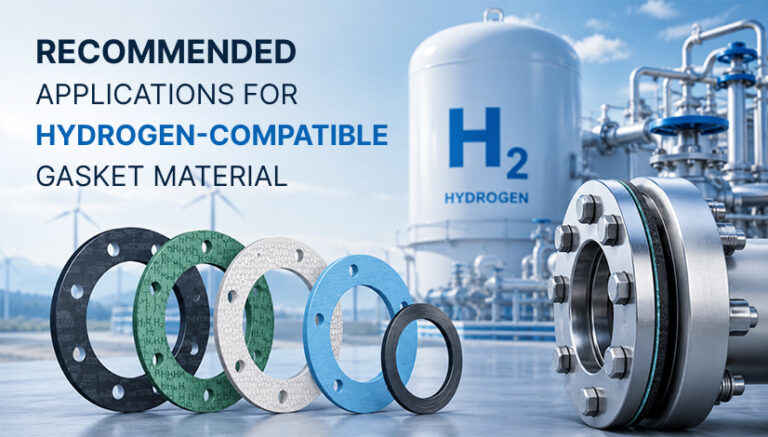
Hydrogen-compatible gasket material may be considered in hydrogen production support systems, fuel-cell balance-of-plant equipment, storage and distribution hardware, electrolyzer auxiliary equipment, compressors, valves and instrumentation. The final choice depends on pressure, temperature and safety classification. For non-critical support areas, a properly validated Hydrogen Gasket Material can help reduce leaks and support cleaner operation. For critical high-pressure joints, the material should be reviewed by qualified engineers against applicable codes and project specifications.
Common Mistakes to Avoid in Hydrogen Sealing
- Using a standard gasket only because it worked for oil, air or water.
- Ignoring hydrogen permeation and focusing only on temperature rating.
- Choosing excessive thickness that reduces blowout resistance.
- Installing the gasket on scratched, warped or corroded flanges.
- Skipping torque sequence and bolt load verification.
- Not documenting material traceability for safety-sensitive systems.
These mistakes usually appear small at purchase stage but can create expensive leakage issues later. Hydrogen Gasket Material should be reviewed as part of the complete joint system: gasket, flange, bolts, installation and operating environment.
Why Choose Aeroflex for Industrial Gasket Material Support
Aeroflex Sealing Material Manufacturing Co. has been associated with premium non-asbestos gasket materials since 1992 and serves automotive, industrial and engineering applications. While every hydrogen project requires its own engineering validation, Aeroflex’s knowledge of non-asbestos sheets, NBR-based soft gasket materials and industrial sealing requirements can help buyers make informed comparisons. For buyers developing support equipment around hydrogen applications, Aeroflex can assist with material discussions based on fluid exposure, temperature, pressure and thickness needs.
If you are evaluating Hydrogen Gasket Material for a new project, ask the Aeroflex team about suitable gasket families, testing requirements and custom size availability. The right conversation early in the design stage can prevent costly changes after prototype testing.
FAQs About Hydrogen Gasket Material
Q1. What is the best Hydrogen Gasket Material?
There is no single best Hydrogen Gasket Material for every system. The right material depends on pressure, temperature, flange design, leakage limit, chemical exposure and certification needs.
Q2. Can non-asbestos gasket material be used in hydrogen applications?
Non-asbestos materials may be considered for selected support or auxiliary systems when validated for the exact operating condition. Critical high-pressure hydrogen joints require engineering approval and suitable test data.
Q3. Why is hydrogen sealing difficult?
Hydrogen is difficult to seal because it is small, light and prone to leakage through tiny pathways. That is why Hydrogen Gasket Material must be checked for permeation, recovery and installation sensitivity.
Q4. How often should hydrogen gaskets be inspected?
Inspection intervals depend on safety classification, operating cycles and plant procedures. Any sign of leakage, pressure drop, flange corrosion or retightening need should trigger review of the Hydrogen Gasket Material and joint design.
Final Thoughts on Hydrogen Gasket Material
Hydrogen Gasket Material selection in 2026 requires more than choosing a gasket from a general catalogue. Engineers must evaluate permeation, pressure, temperature, chemical compatibility, flange condition, bolt load and supplier support. When these seven factors are checked together, the gasket becomes a controlled safety component rather than a weak point in the system.
For industrial buyers, the next step is to share operating data with a reliable manufacturer and shortlist materials based on actual service conditions. Contact Aeroflex Sealing Material Manufacturing Co. to discuss gasket material options for industrial, automotive and energy-related sealing applications.
